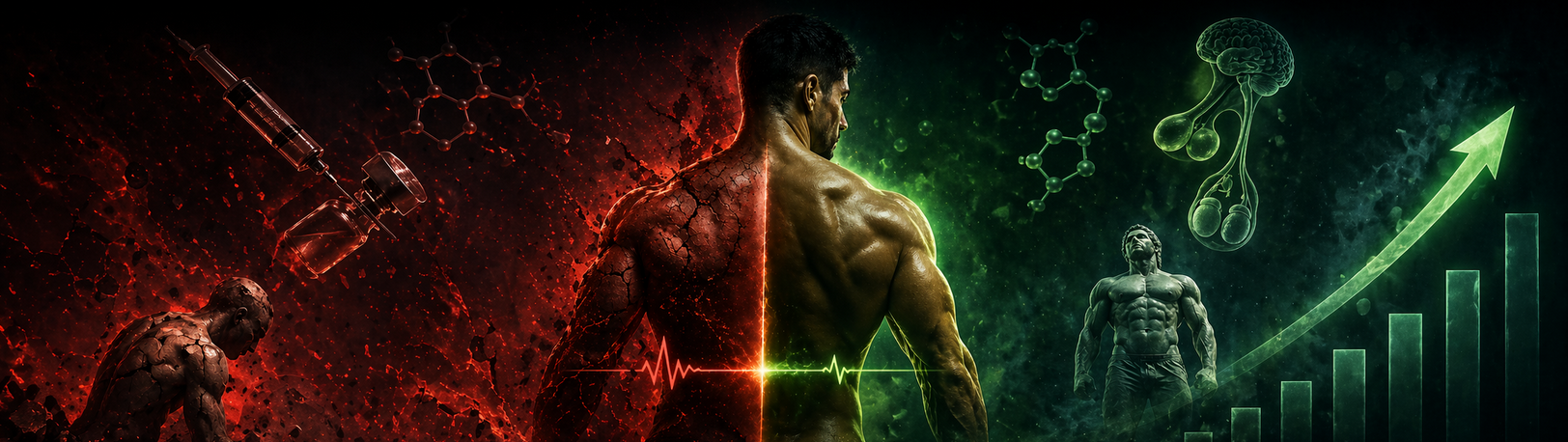
Physiology of the “Crash”: The Mechanism of Losing Your Gains
When you introduce exogenous hormones into the body, it activates a protective negative feedback mechanism. The pituitary gland stops producing luteinizing hormone (LH) and follicle-stimulating hormone (FSH), signaling the testes to cease natural testosterone production. This leads to testicular atrophy and a complete shutdown of spermatogenesis.
At the moment you discontinue the drugs, you encounter what is often referred to as a “cortisol rebound.” During the cycle, anabolic steroids were suppressing cortisol activity, protecting muscle tissue from breakdown. After the compounds are cleared, cortisol receptors become hypersensitive.
In a state of near-zero testosterone and elevated cortisol, the body begins aggressively breaking down muscle tissue (catabolism) for energy, while simultaneously increasing the accumulation of visceral fat. Without proper pharmacological intervention, you risk losing up to 100% of your acquired physique, effectively replacing muscle mass with fat and water retention.
Psychological Collapse and Depression
However, the most severe impact occurs on the level of neurobiology. Testosterone is not just an anabolic hormone — it is a powerful neuromodulator that directly influences dopamine and serotonin systems.
A sharp decline in androgen levels can trigger a condition that is clinically similar to major depression. Studies suggest that up to 95% of men experience withdrawal symptoms, including:
- Anhedonia (inability to experience pleasure)
- Chronic fatigue
- Loss of libido
- Emotional instability
- In severe cases, suicidal thoughts
Erectile dysfunction during this period is not only physiological but also psychological, creating a vicious cycle of low confidence and anxiety.
Why Supplements Do Not Work
Attempts to restore hormonal balance using herbal supplements (such as Tribulus terrestris) are ineffective. No over-the-counter product is capable of reactivating the HPG axis when it is deeply suppressed.
The only evidence-based approach involves the use of Selective Estrogen Receptor Modulators (SERMs), such as clomiphene or tamoxifen.
Their mechanism of action is based on blocking estrogen receptors in the hypothalamus. This “tricks” the brain into perceiving a critical deficiency of sex hormones. In response, the hypothalamus increases the release of gonadotropin-releasing hormone (GnRH), which stimulates the pituitary to produce LH and FSH, thereby forcing the testes to resume natural testosterone production.
This is not “support.” This is endocrine system resuscitation.
Critical Timing Mistake
Starting post-cycle therapy requires precise timing. If you begin PCT while exogenous hormones are still active in the bloodstream (especially long esters), the therapy will be ineffective.
- Propionate: PCT can begin after 3–4 days
- Enanthate or Cypionate: you must wait 14–21 days
Attempting to bypass this phase without proper intervention can lead to secondary hypogonadism, a condition that may require lifelong testosterone replacement therapy (TRT).
Your health and your results do not depend on how hard you trained during the cycle — they depend on how intelligently you exit it.